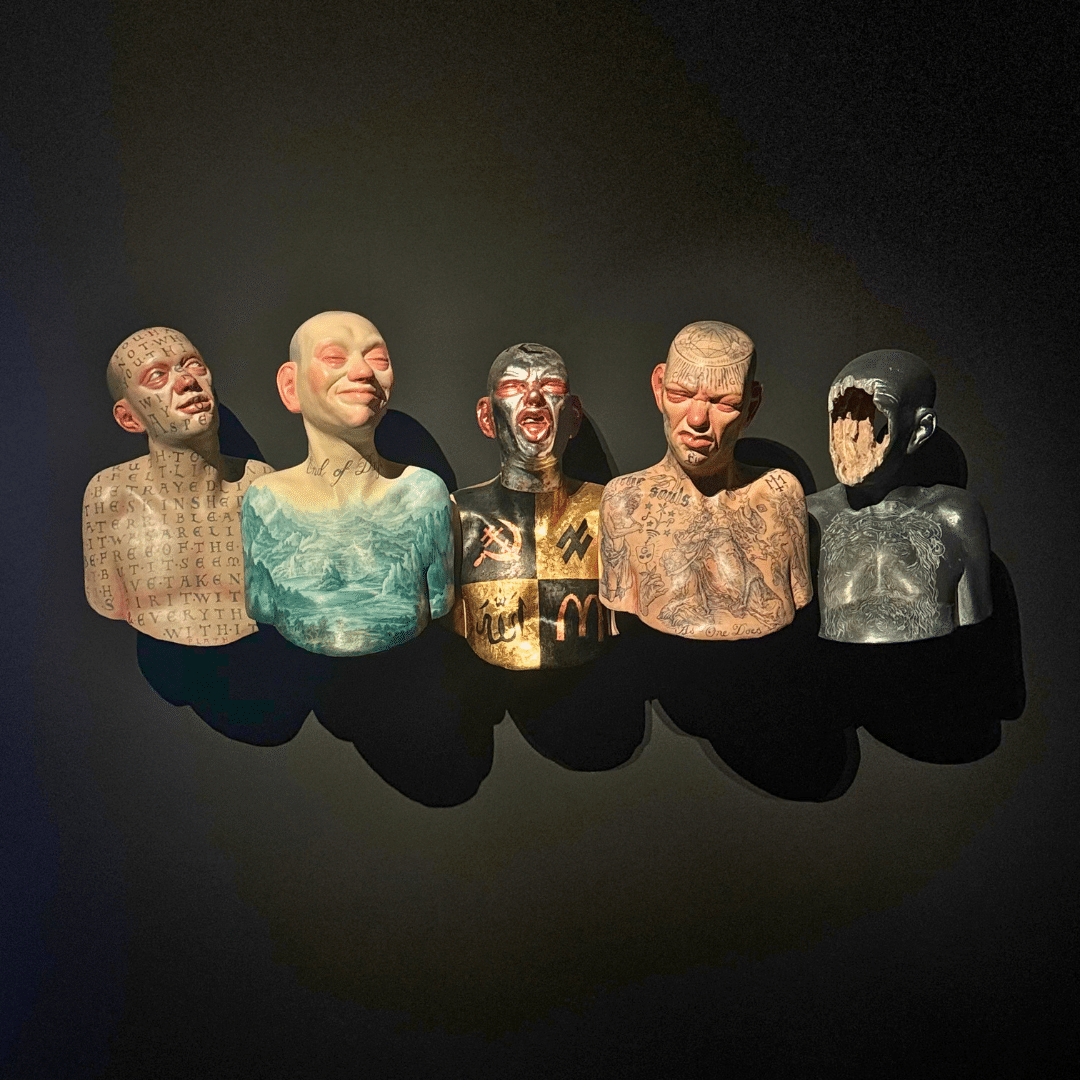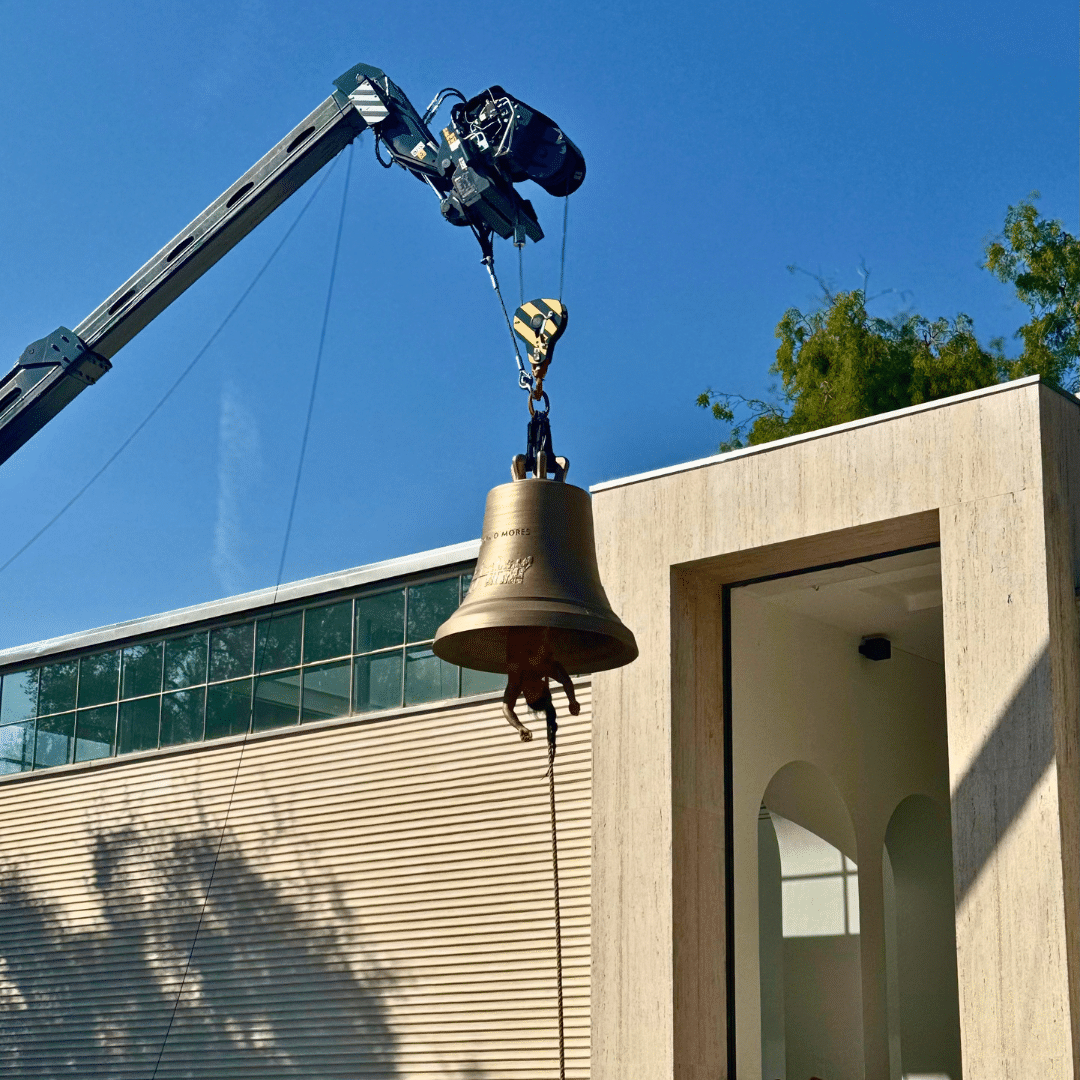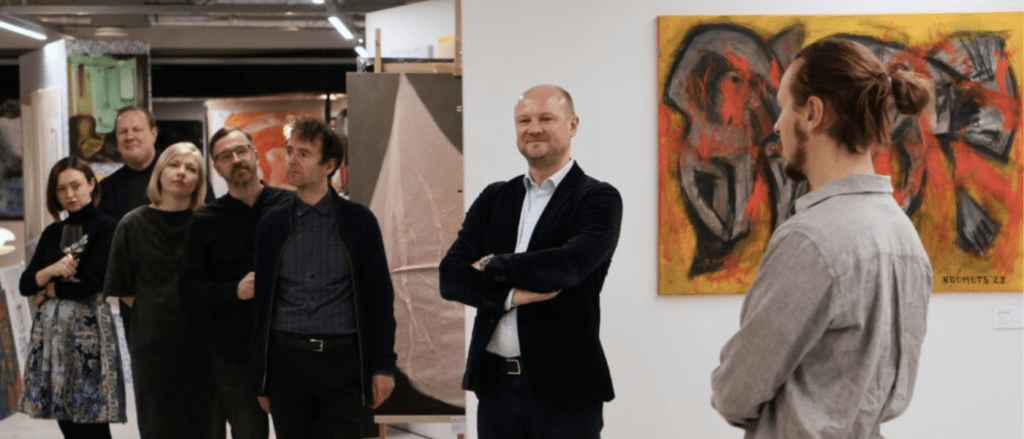
Visiting the Venice Art Biennale is always a bit like a workout or a study trip. So much art in one place inevitably means you cannot see everything, and that the extremes become particularly apparent.
This time, the focus of my visit was on the Biennale’s main curatorial exhibition, national pavilions, private museums and foundations.
Multisensory, immersive and multidisciplinary
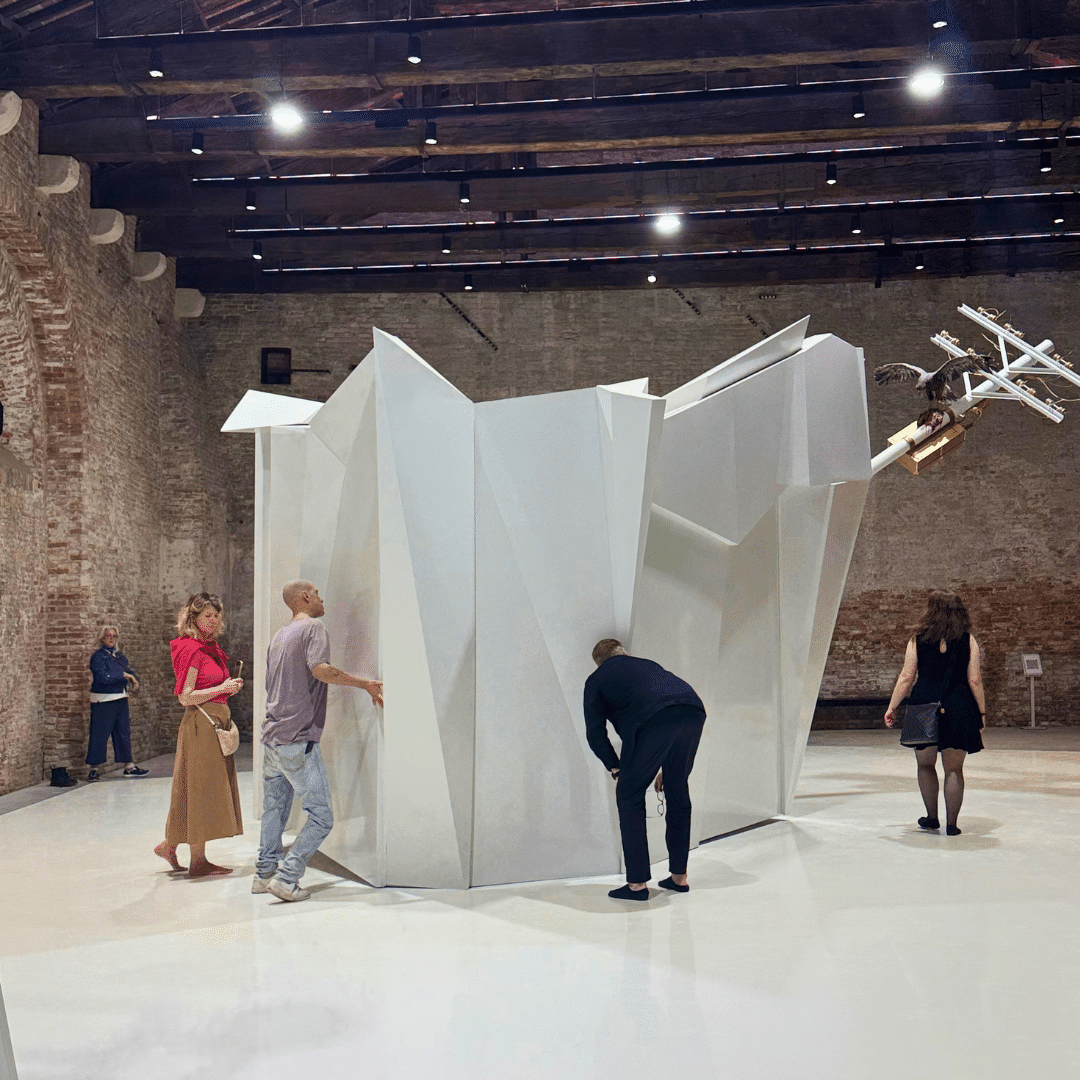
Perhaps the very word pavilion creates an expectation that, alongside art, visitors should also be offered a spatial experience. This seems particularly true of the national pavilions, which were perhaps the weakest link in Venice this year. On several occasions, I found myself asking: “Where is the art?” Some pavilions felt more like trade exhibitions or EXPO displays, where showing off the latest technology is part of the attraction.
When it comes to visual culture, I always prefer to look first and read later. Yet far too often, I had to turn to the accompanying text just to understand what was going on or what I was looking at.
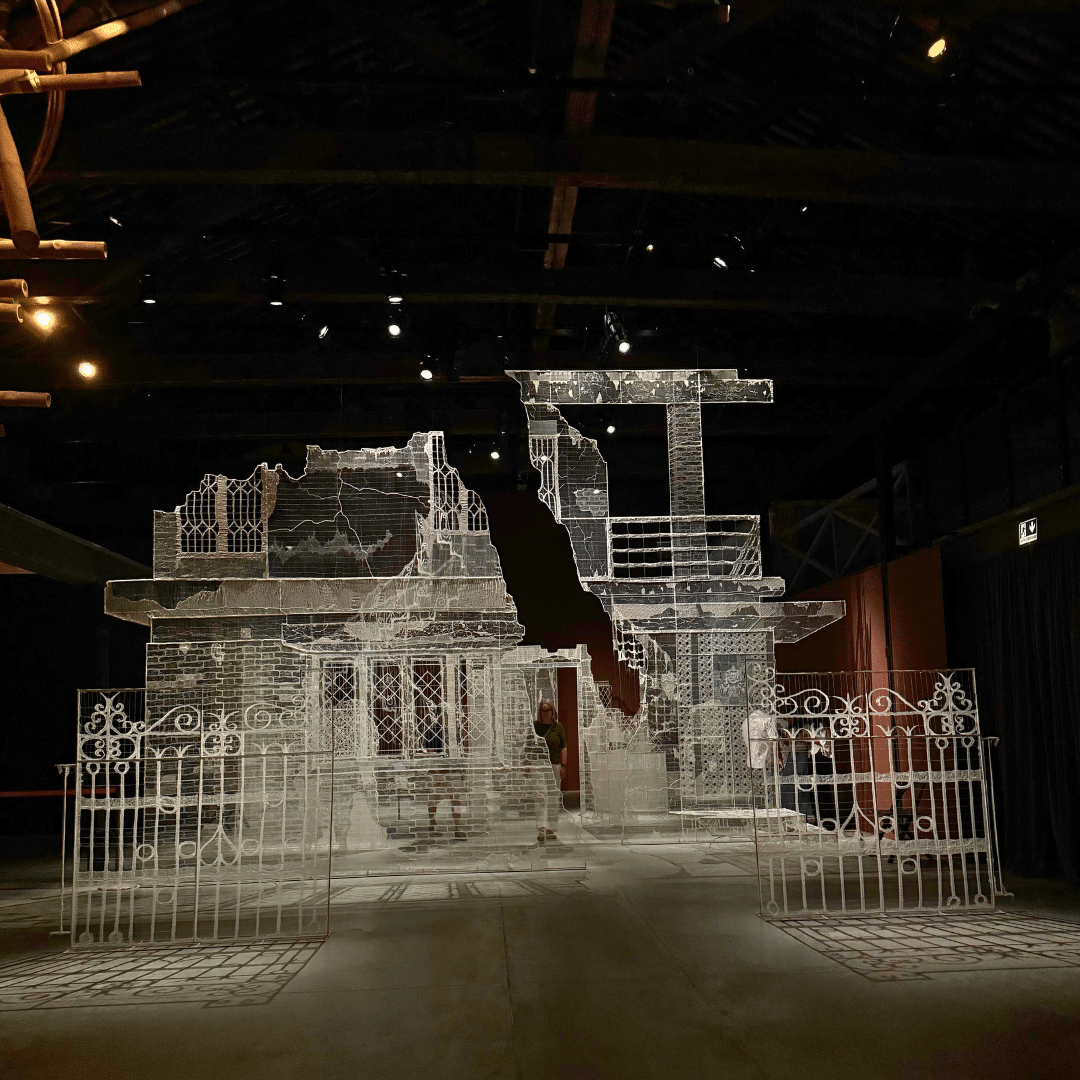
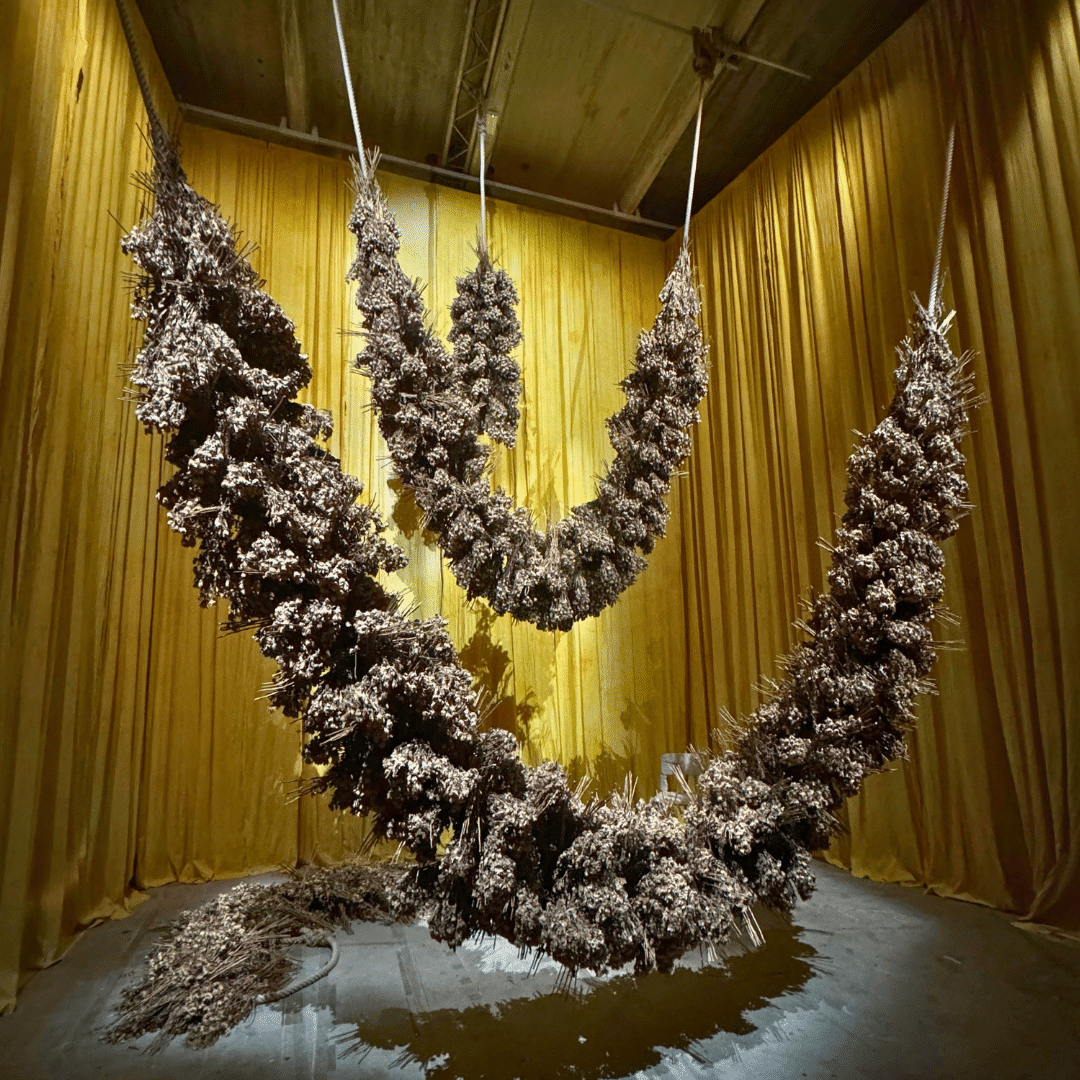
The most frequently repeated words in exhibition texts this year were multisensory and immersive. Multidisciplinary has not disappeared either. Many exhibitions attempted to engage every sense, filling rooms in every dimension with objects, visuals, sounds and scents, and designing an emotional response.
I do not recall previously seeing signs warning visitors that “NB! Natural fragrances are used in this room.” Just two Biennales ago, warnings about nudity seemed sufficient.
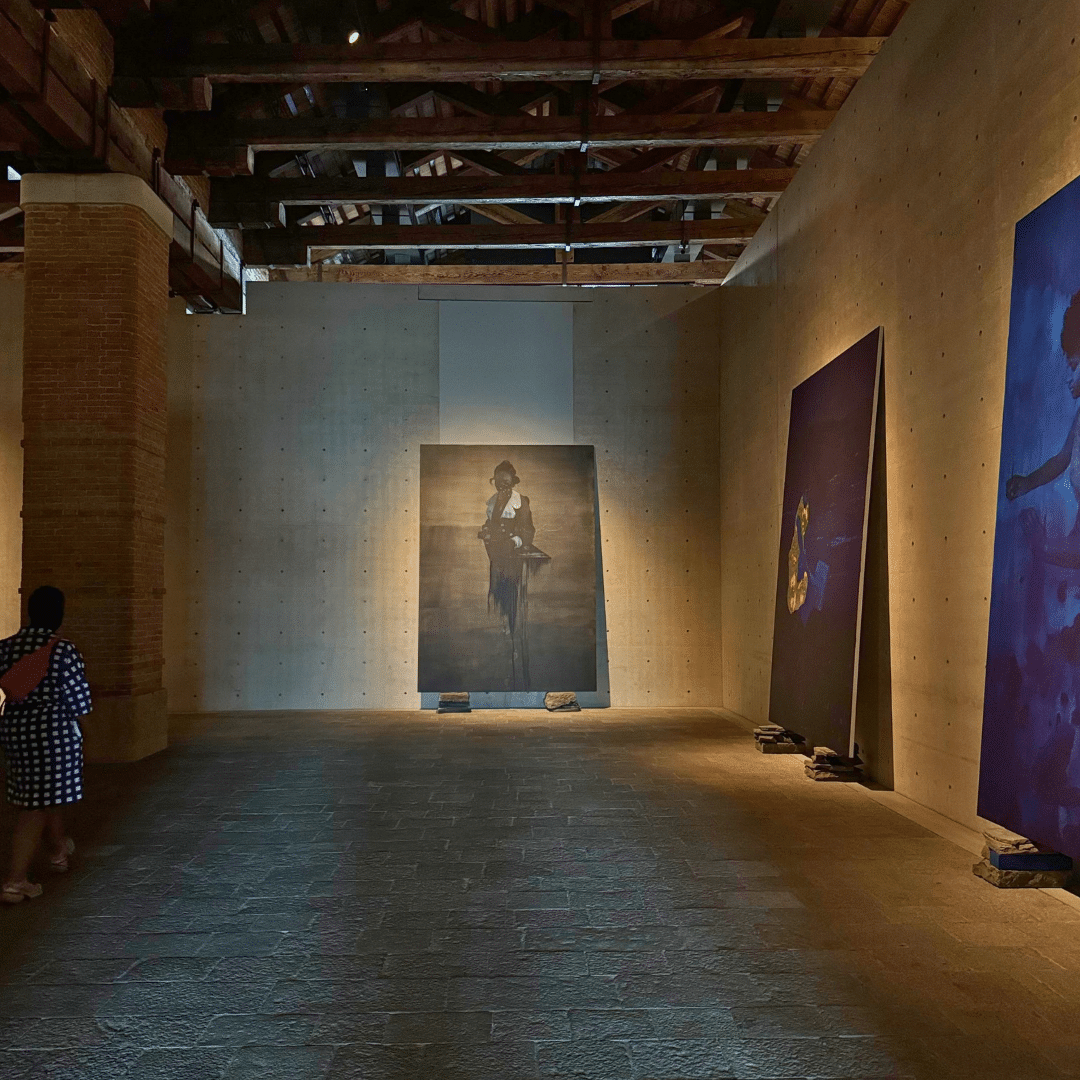
Clearly, our attention cannot keep up with this all-encompassing experience repeated from room to room. The senses become exhausted, and eventually only a few flashes remain memorable amid the overwhelming abundance. From the main curatorial exhibition, it was individual works that stayed with me, such as Kaloki Nyamai’s enormous paintings.
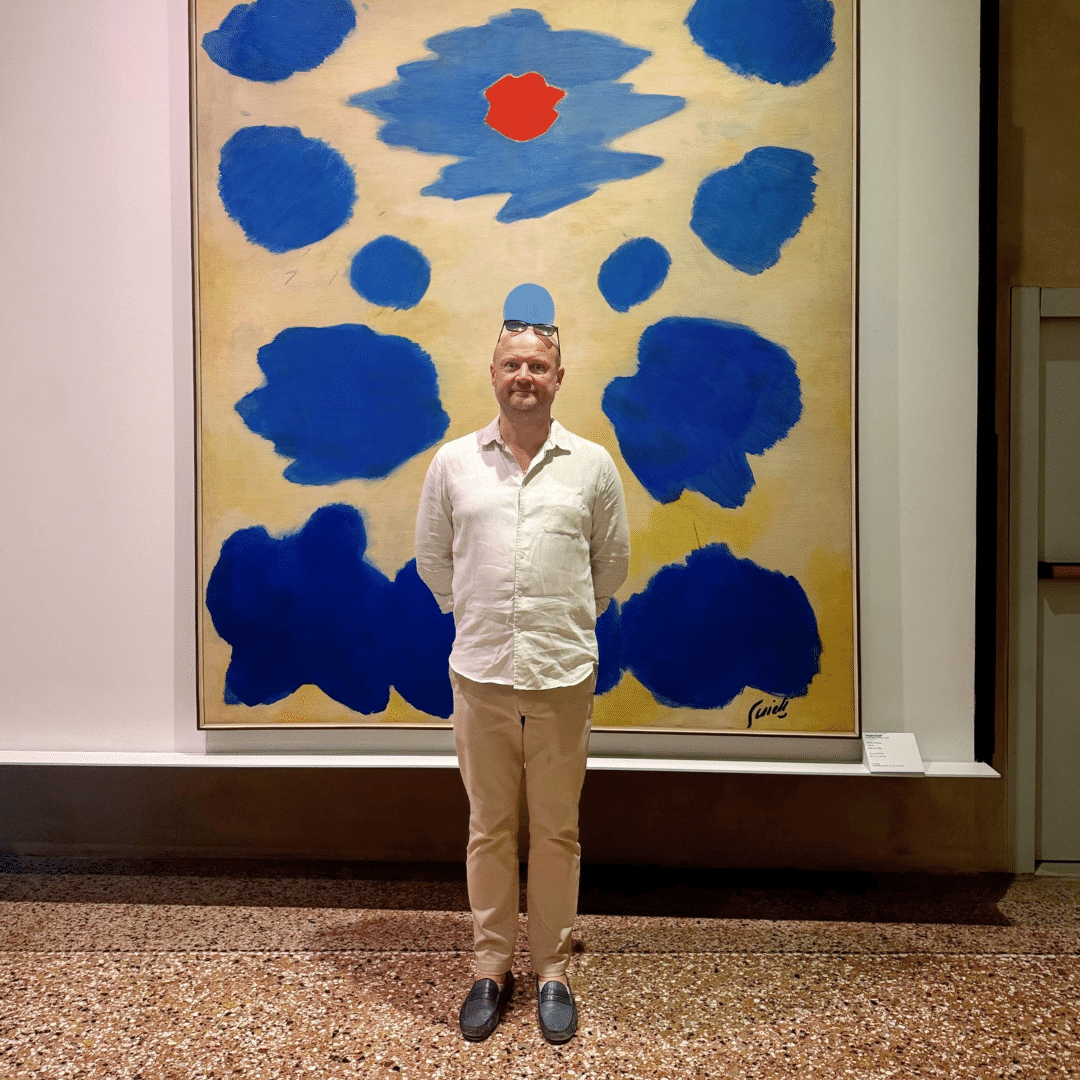
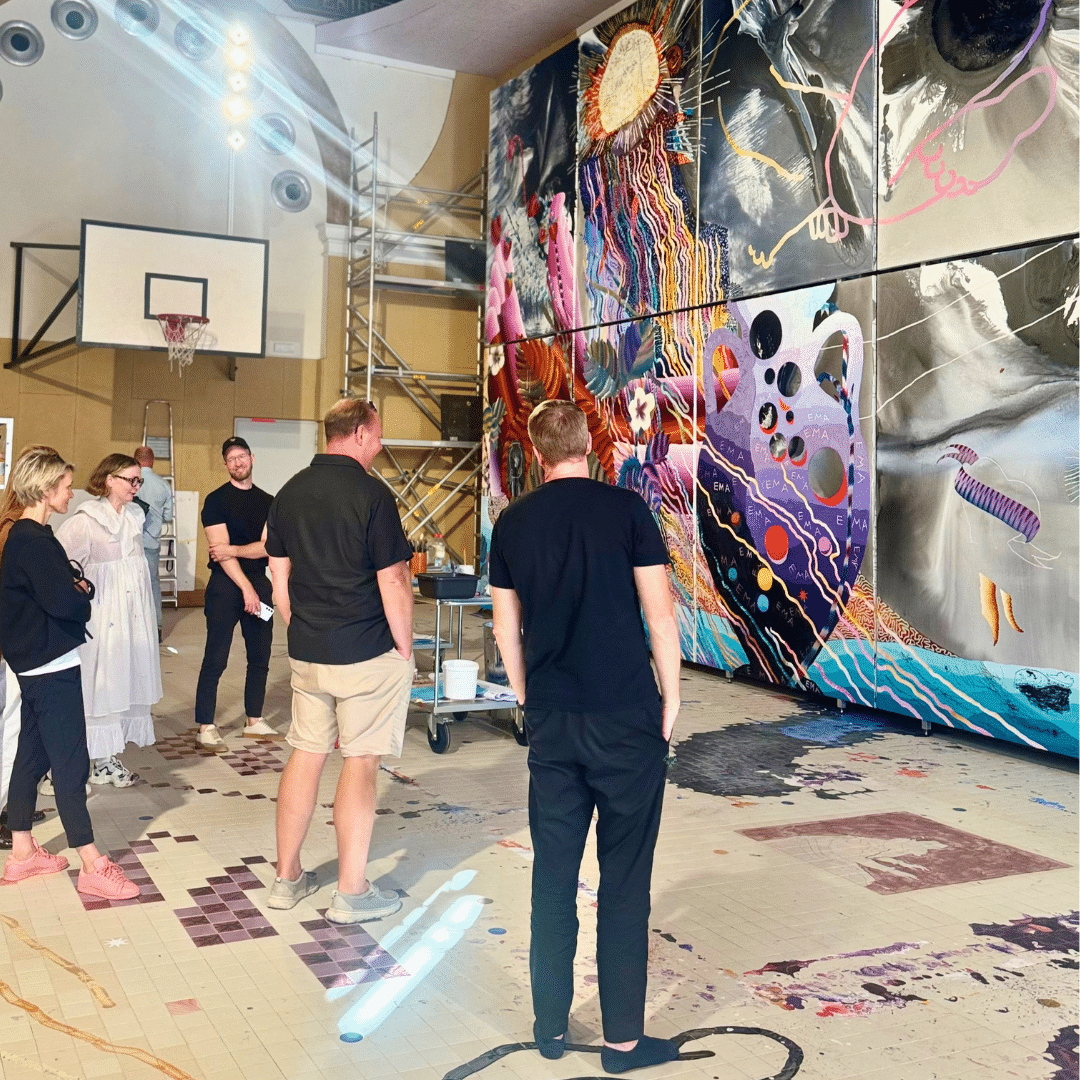
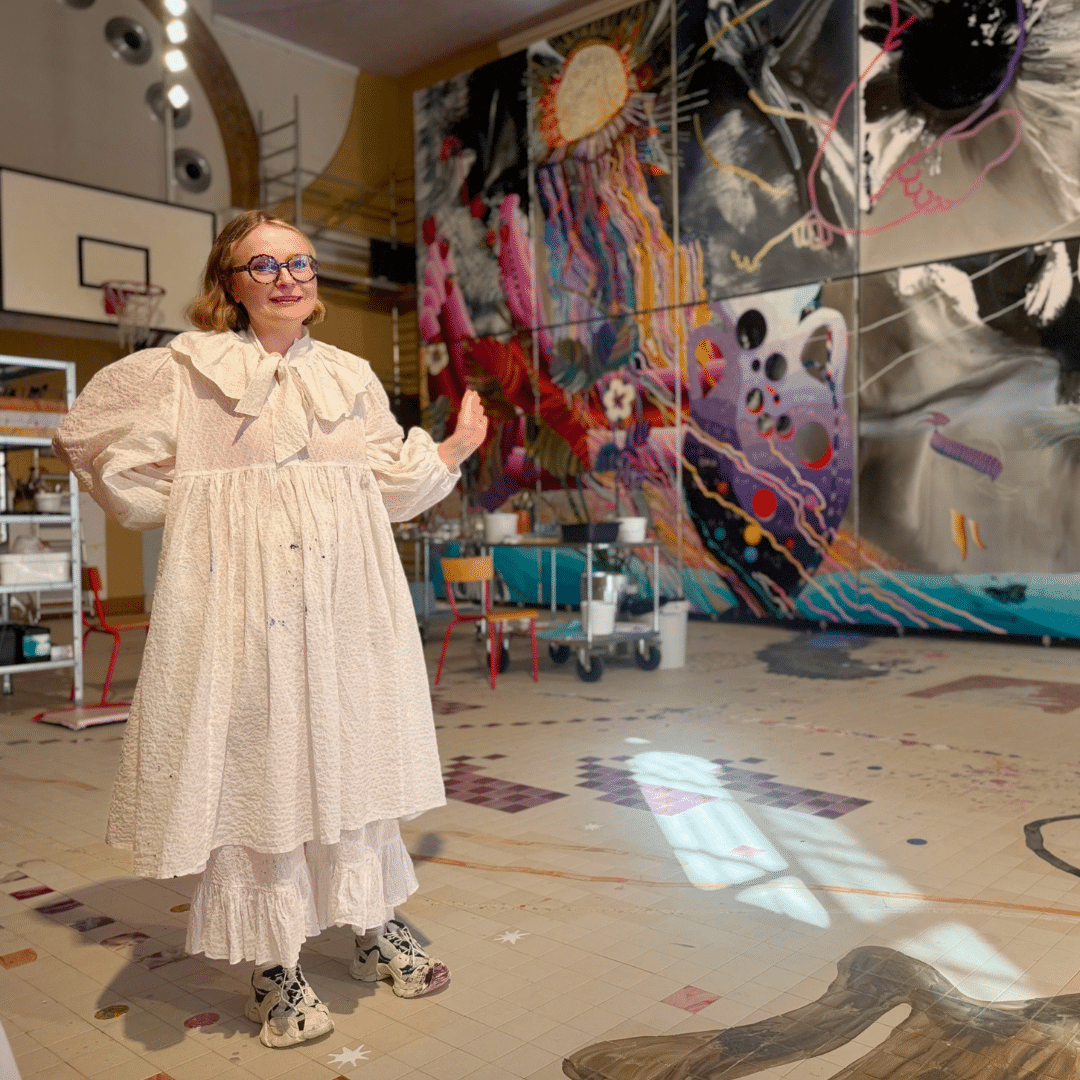
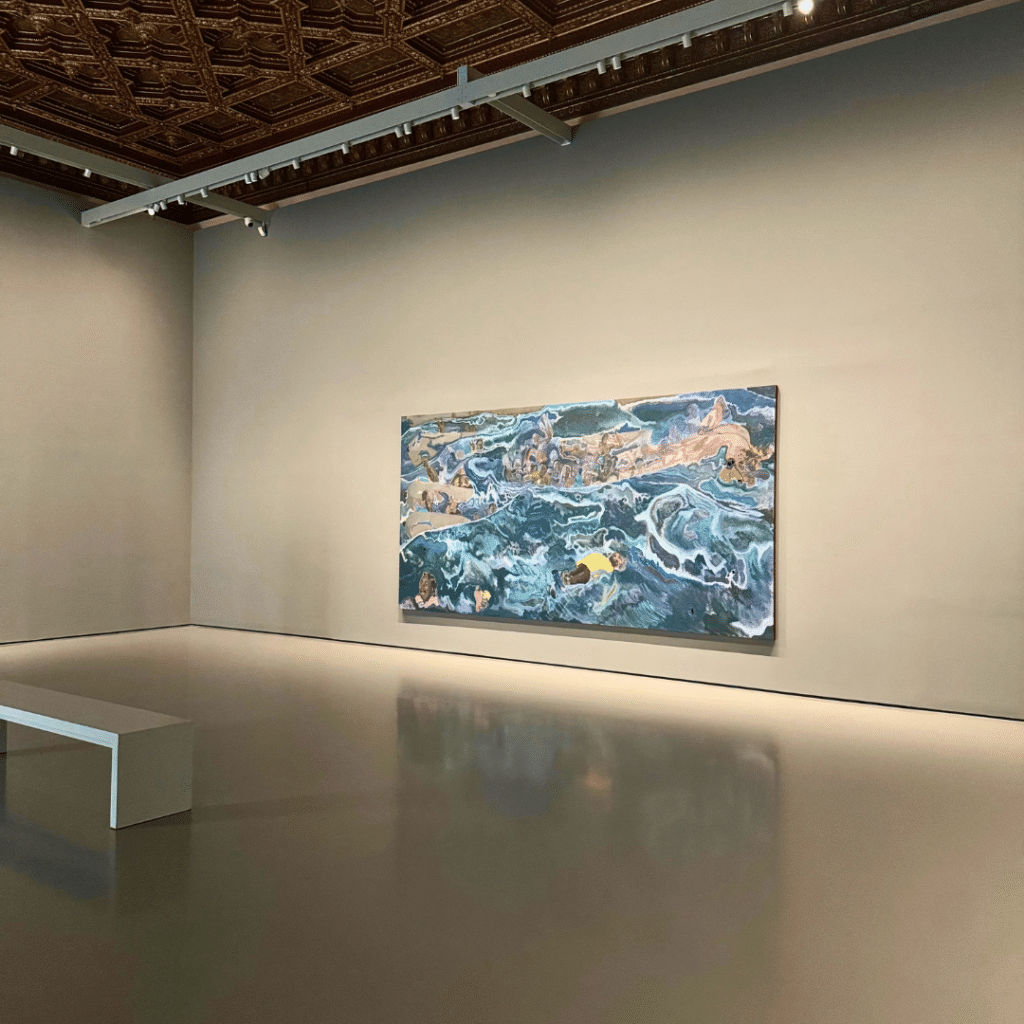
One of the most memorable rays of sunshine was certainly the Estonian Pavilion and Merike Estna. She has managed to fill an entire room with monumental painting, and the apparent lack of demands her work places on the viewer is precisely what draws attention.
You could spend endless time examining those 22 canvases, both up close and from a distance. They are simultaneously painterly and allegorical. Our group was still looking for toes and connections in photographs over dinner that evening.
Beyond the Biennale
The Biennale faces increasing competition from foundations, museums, galleries and the city itself. And that competition is becoming stronger.
In our part of the world, private museums and collections tend to play a secondary role, with state museums and institutions taking the lead. Venice and Paris, however, clearly demonstrate the growing influence of private collections across the art world.
We ended up spending as much time in private museums as at the Biennale, and some of the greatest experiences came from them. When resources and talent meet, the results can be exceptional.
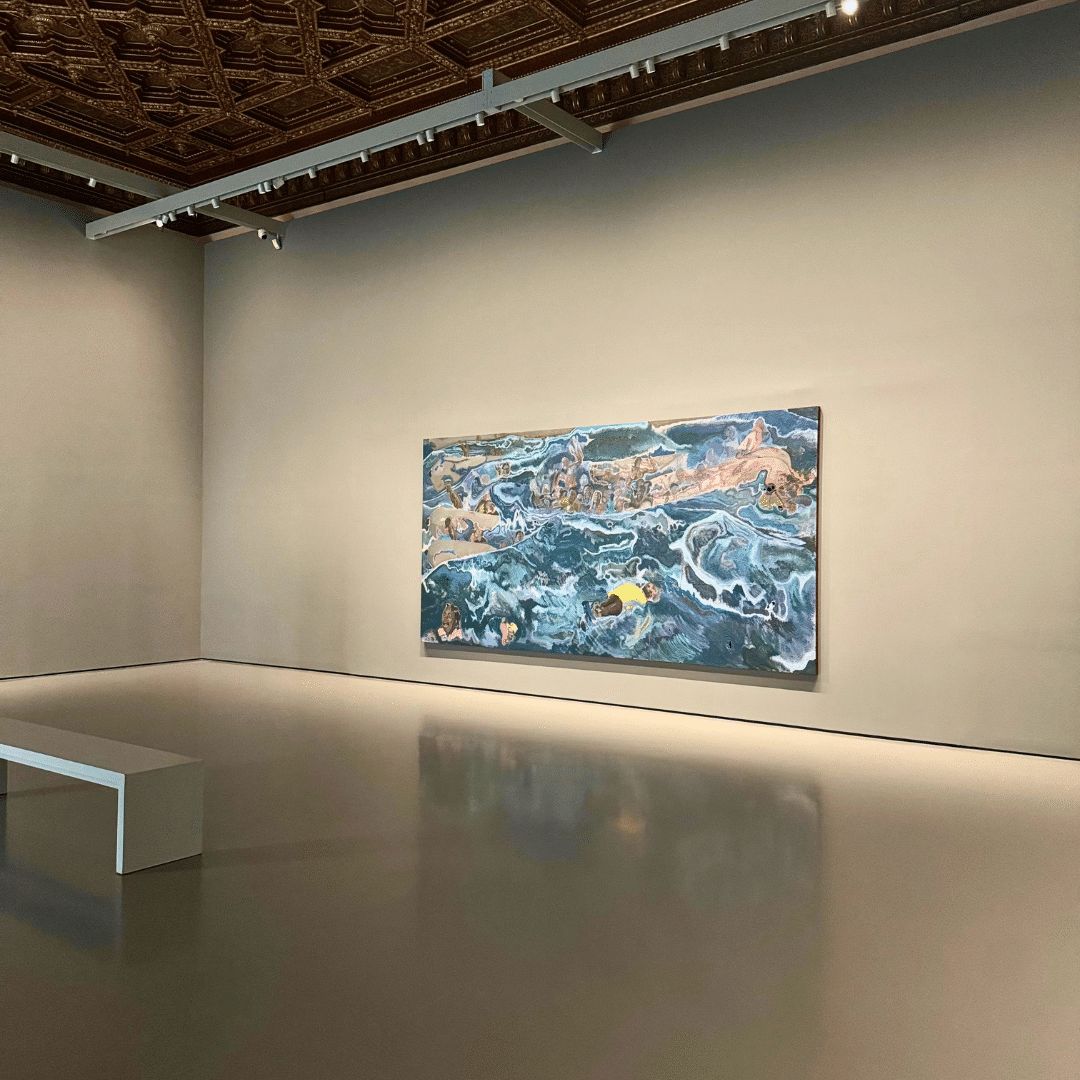
Michael Armitage’s exhibition at the Pinault Collection (Palazzo Grassi) is reason enough to visit Venice, while Lorna Simpson’s exhibition at the Pinault Collection’s other venue, Punta della Dogana, is essential viewing for anyone who loves monumental painting.
From boys sniffing glue to ambiguous landscapes, Armitage’s paintings completely knocked me over. This was exactly my kind of art. Somewhere between figurative and abstract, explicit and concealed.
These paintings were far more immersive than some of the works that explicitly claimed immersion in their exhibition texts.
Art that can be understood in only one way, without engaging my brain in the process of interpretation, leaves me completely cold. (As does an exhibition text that tells me what I am supposed to feel.)
An artist’s talent lies in translating a three-dimensional world onto a two-dimensional canvas (or, in Armitage’s case, bark cloth) in a way that makes my brain reconstruct it in three dimensions.
A good exhibition is one that leaves you wanting a little fresh air afterwards. (I have also heard it said that if looking at a work of art feels like eating glass, you should buy it. 🙂
Beauty, protest and everyday racism
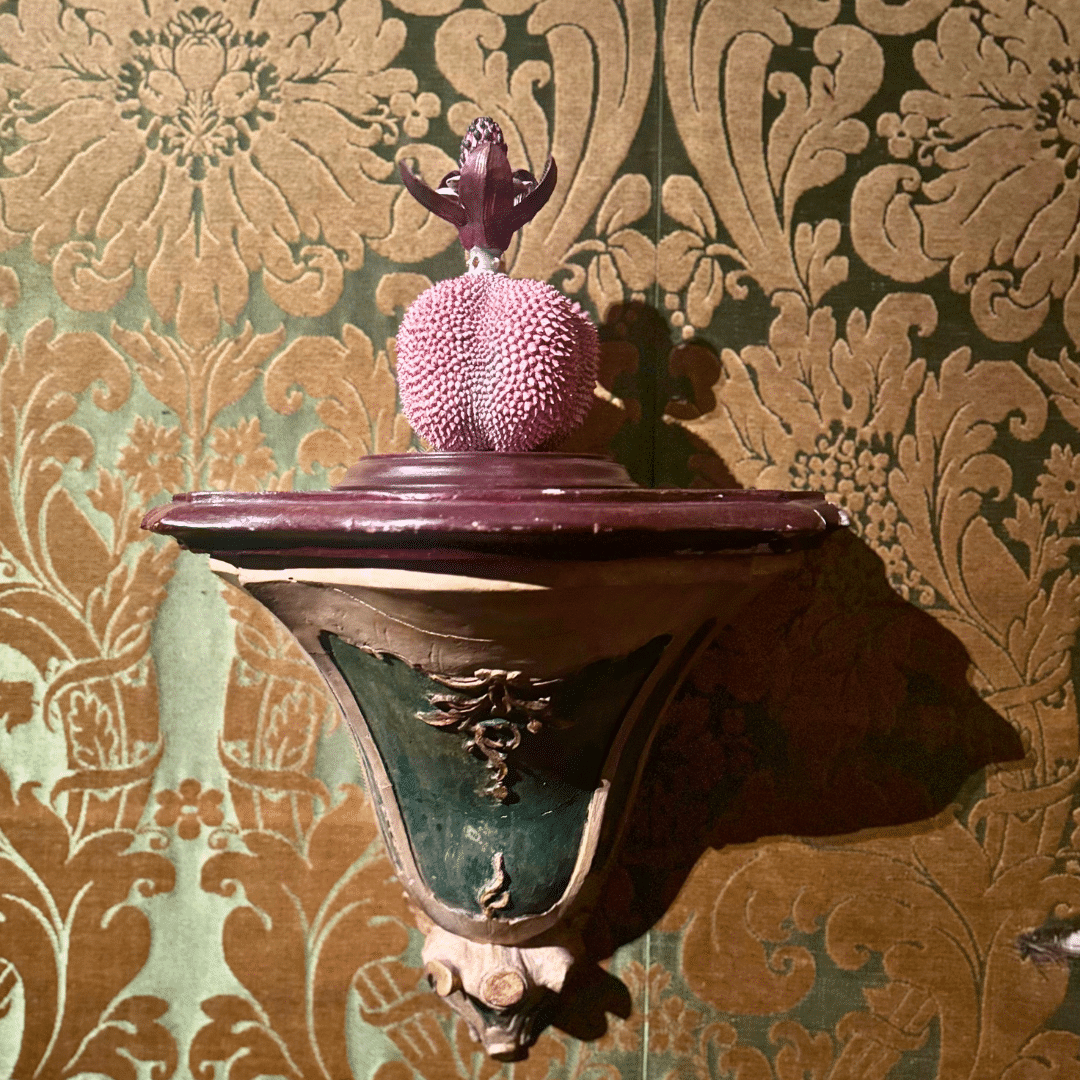
Fondazione Dries Van Noten’s exhibition “The Only True Protest Is Beauty” placed considerable emphasis on design and beauty. Yet it felt closer to art than to craft (a distinction that came into question with many works at the Biennale) and certainly succeeded in creating a cohesive experience.
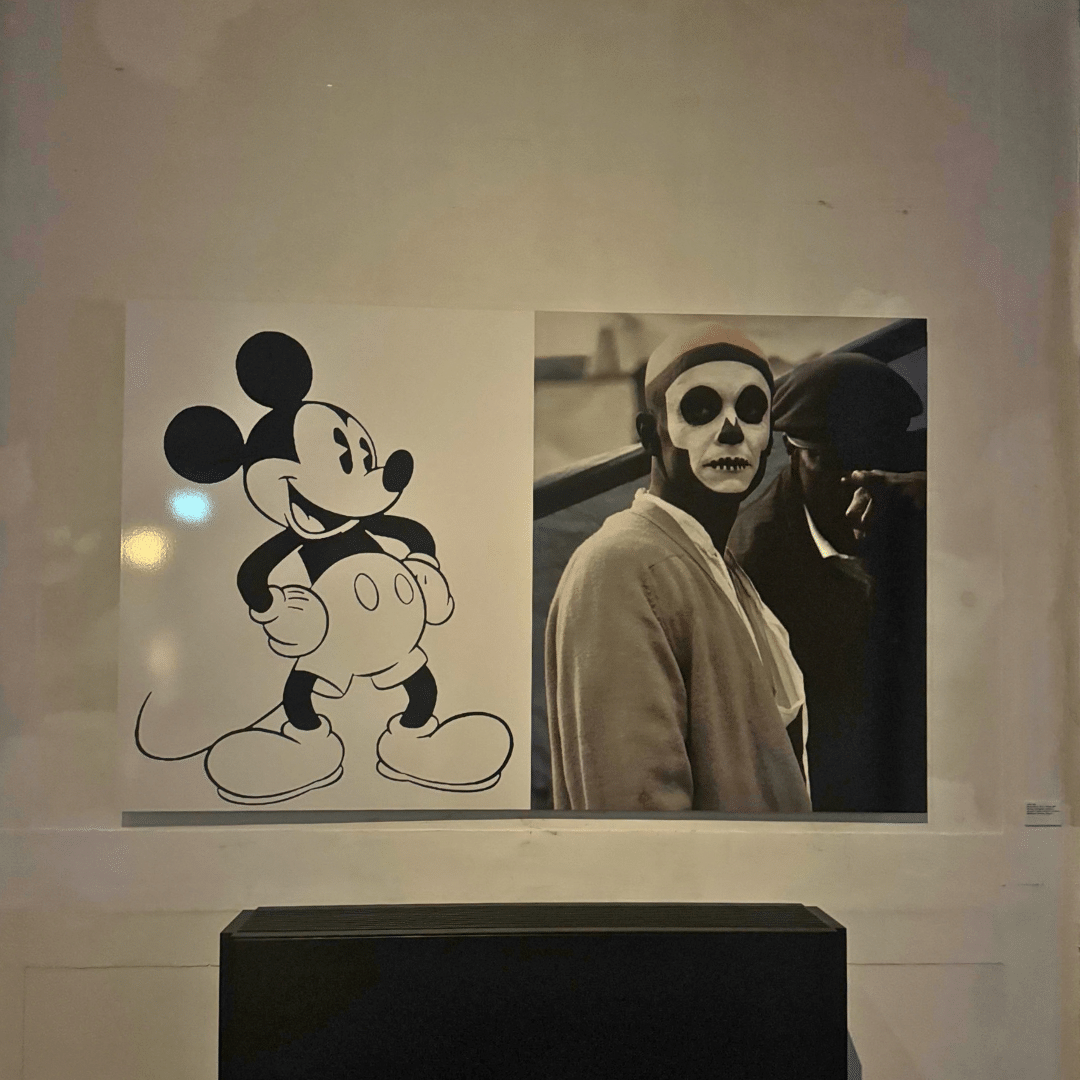
Richard Prince and Arthur Jafa at Fondazione Prada made for a particularly successful pairing, especially from a curatorial perspective.
Their critique of everyday racism and social inequality was at times extremely difficult to confront, partly because the exhibition itself was so beautifully and carefully arranged.
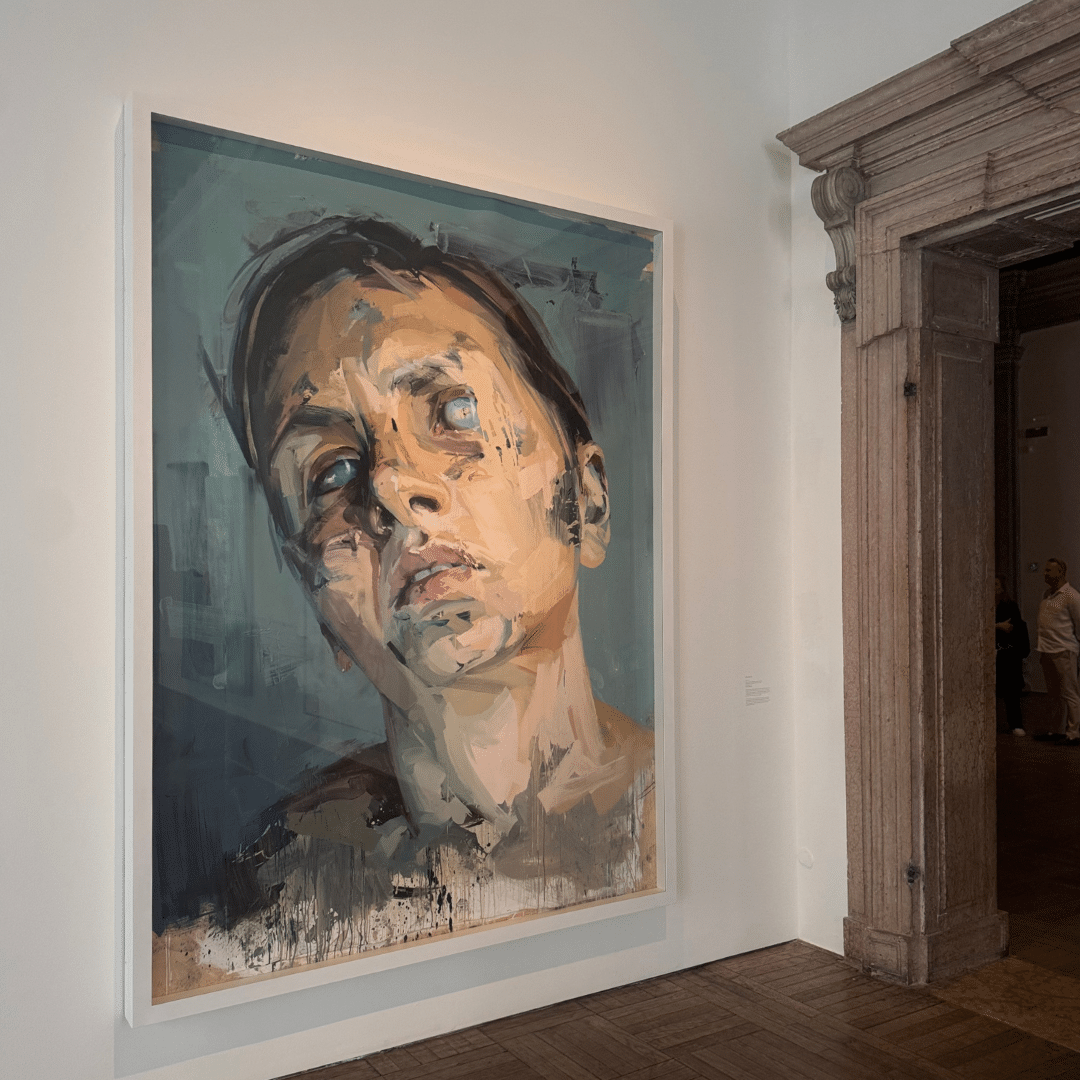
Jenny Saville’s painting exhibition at Ca’ Pesaro, supported by the mega-gallery Gagosian, was good precisely because it provoked mixed feelings. I am not particularly fond of the subjects or settings in her paintings, but there is no doubt that she is an exceptionally skilled painter.
There were other moments of artistic excitement, both large and small, and I probably missed more than I managed to see.
In other words, anyone visiting Venice should be prepared for an overwhelming abundance of art. The entire city puts your capacity to absorb it to the test, but fortunately, it offers plenty of excellent art in return.
The 61st Venice Art Biennale, titled “In Minor Keys” and curated by Koyo Kouoh, opened on 9 May. Estonia is represented by painter Merike Estna, whose work was completed during the Biennale, turning the pavilion into something of an open studio. The Biennale remains open until 22 November 2026.
Siim Raie, Gallerist, Artrovert Gallery